
Use case
Argus for ticket resellers
Seller and buyer accounts across marketplaces and regions, each in its own profile behind its own proxy — the accounts a licensed resale desk already holds, kept from being read as one.


A resale desk of any size is a set of accounts: a seller account on each marketplace, a buyer account for the inventory research, separate logins for the territories you are licensed in, and a team that has to reach all of them without passing passwords around. Marketplaces read device and network closely, because linked accounts are how they enforce their own seller rules. The four sections below are how that set is kept properly separate — and the fifth is the line this page does not cross.
Isolation · Fingerprints
Every seller account in a browser of its own
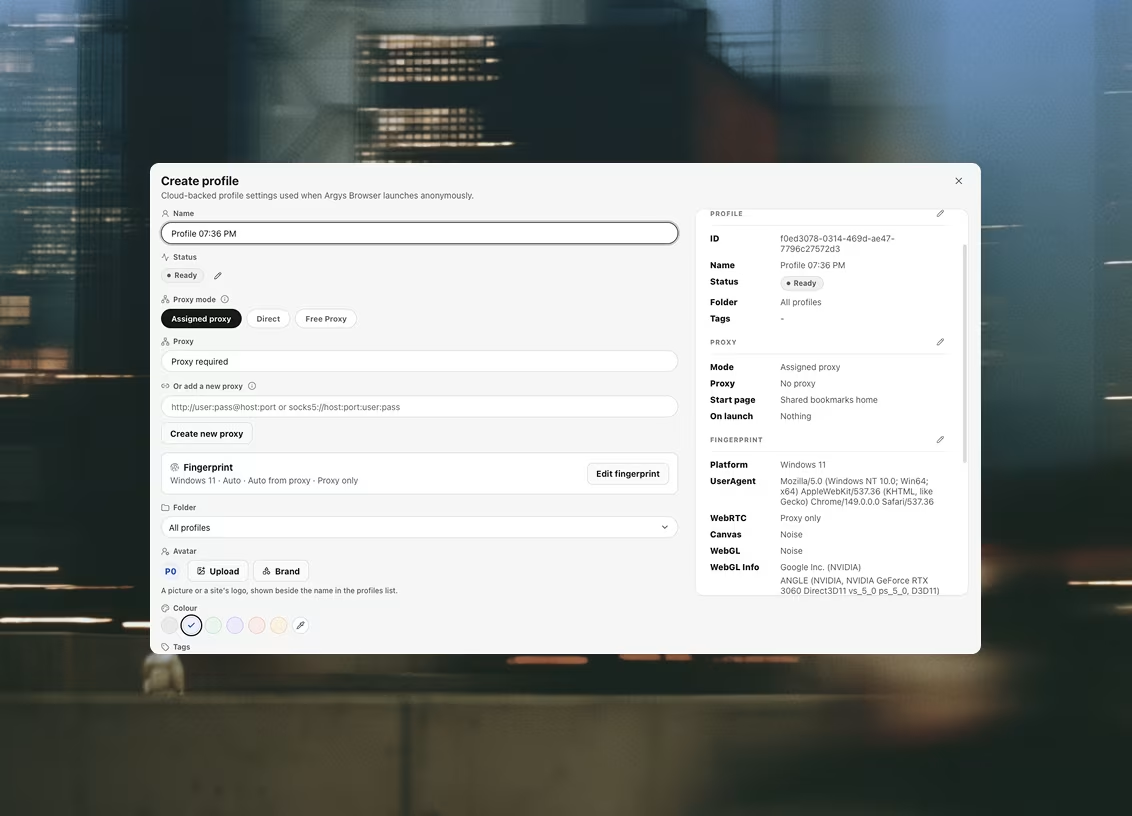
Two marketplace accounts opened in one browser share storage, cache and cookies, and a marketplace does not have to work hard to notice. Argus gives each account a profile that starts from its own directory — separate storage, cache and cookie jar, with session restore off — and a coherent hardware identity generated as one set, so its platform, cores, memory, screen, timezone and languages agree with each other the way a real machine's do.
The point is not disguise. It is that your Manchester seller account and your Berlin seller account are two ordinary, unremarkable machines rather than two tabs of the same one.
Proxies
Arrive from the territory the account is licensed for
Inventory, pricing and often the account's own terms are regional. An account registered for one market that signs in from another every day invites a verification cycle at best. Argus keeps proxies in a shared library and assigns one per profile, so each account arrives from where it belongs and the provider behind it can be rotated without touching the profiles.
Health checks report the egress IP, country and latency, and a failing proxy blocks the launch rather than silently falling back to your office connection — which is the accident that puts one address behind every account you own. The check also flags a datacenter exit and names the provider, and WebRTC leak protection is browser policy on every profile rather than a setting to remember.
Cookie sets · Teams
A desk of five people, no shared password
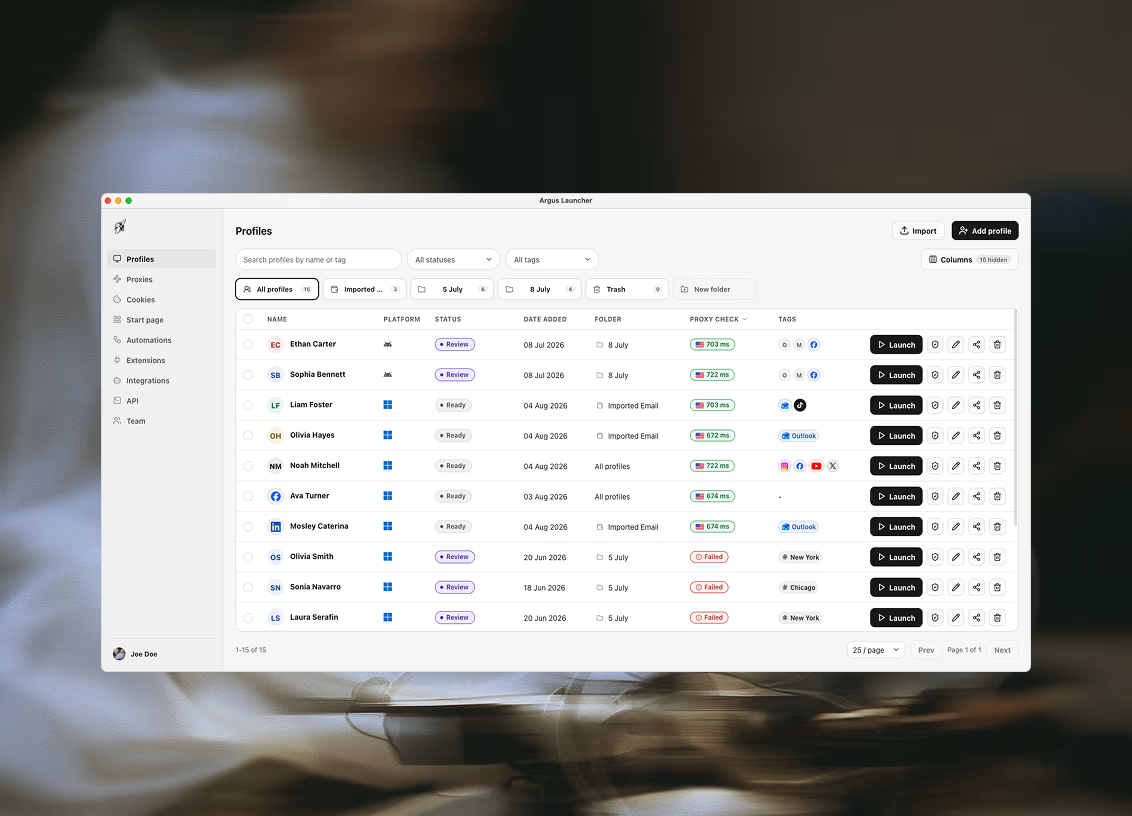
Sign in once, save the session as a cookie set, assign it to the profile, and whoever is on shift opens the account already signed in. Nobody keeps the password in a spreadsheet, and nobody has to be available because the codes go to their phone.
The desk works from one pool of profiles, proxies and cookie sets, synced to the organization. Every write touches a single row, so two people working the same list cannot overwrite each other. When somebody leaves, the accounts stay: nothing lived on their laptop.
Automation · Datasets
What is listed, at what price, across every marketplace
The research half of resale is a browsing job: what the same block is going for on three marketplaces this morning, which of your listings has been undercut overnight. Automations run it inside a real profile behind that profile's own proxy, so pages load the way a buyer in that market sees them.
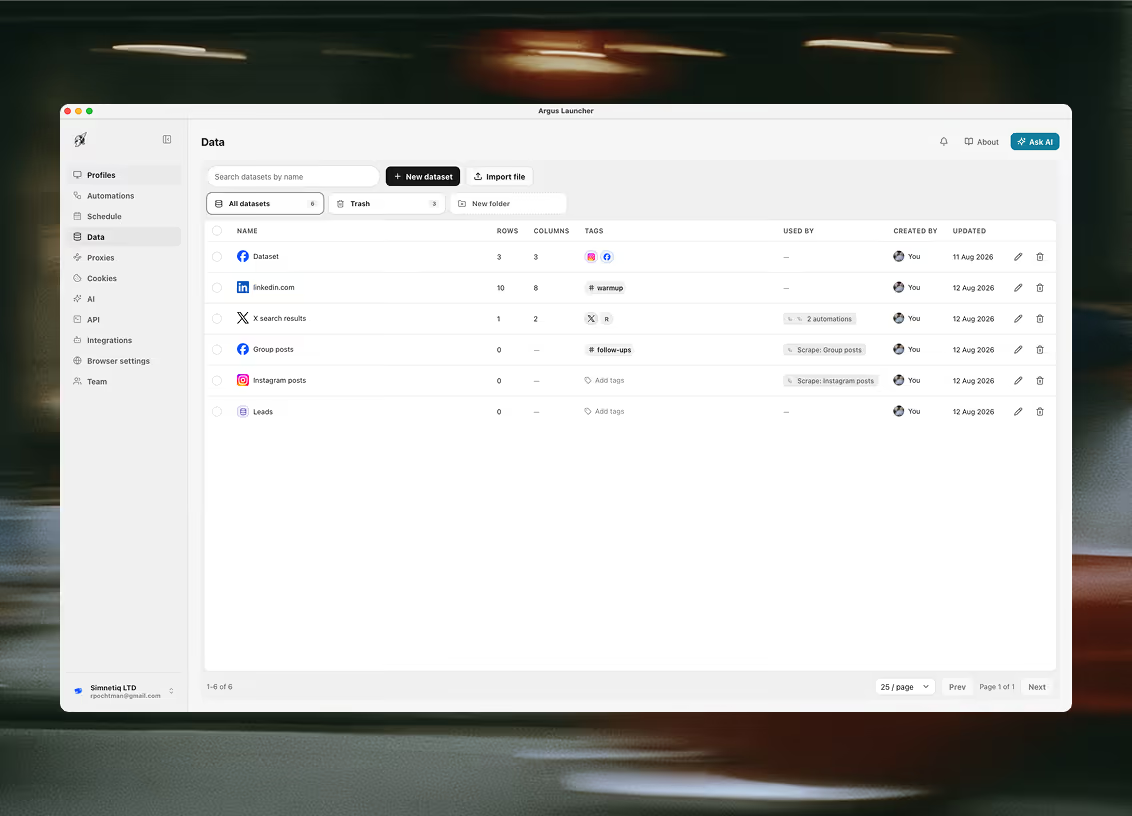
Results land in a dataset — a table the workspace owns, with columns you named — which the whole desk opens rather than one person's export. Put the run on the calendar and it is done before the desk sits down, with the caveat that entries fire only while the launcher is open and a missed slot is marked missed rather than caught up.
Acceptable use
What this page is not for
This page is written for licensed resellers, box offices and touring operations managing accounts they are entitled to hold. It is not written for defeating a primary onsale, and Argus is not sold for that.
Using software to get around a ticket seller's queue, purchase limits or access controls is unlawful in the United States under the BOTS Act and in a number of other jurisdictions, and our acceptable use policy independently prohibits circumventing access controls and accessing functionality a service has not made available to you. We would rather lose that customer than pretend the line is somewhere else.
Questions this comes with
Can Argus get me past a queue or a purchase limit?
No, and we will not build it. Using software to get around a ticket seller's queue, purchase limits or access controls is unlawful in the United States under the BOTS Act and in a number of other jurisdictions, and our acceptable use policy independently prohibits circumventing access controls and reaching functionality a service has not made available to you. We would rather lose that customer than pretend the line is somewhere else.
What is it for on a resale desk, then?
The accounts a licensed resale desk already holds: seller accounts across several marketplaces, buyer accounts for the research you do on your own inventory, and the same again per region. Each one gets its own profile — its own storage, its own coherent device, its own proxy — so a desk running twelve legitimate accounts is not read as one operation running twelve. It separates accounts you are entitled to hold; it does not create an entitlement.
Do I need a proxy for each region I sell into?
A marketplace account that has always signed in from one country and suddenly arrives from another is a verification cycle waiting to happen. Proxies live in a shared library and are assigned per profile, and the health check reports the egress IP, the country it resolves to, the latency, and whether the exit sits on a datacenter network. A proxy that fails blocks the launch rather than leaking your real address.
Can staff work a seller account without the password?
Yes. Save the session as a cookie set, assign it to the profile, and whoever is on shift opens the account already signed in. The password stays with you and the two-factor codes stay on your phone. The whole team works from one shared pool of profiles, proxies and cookie sets rather than trading logins.
Will an inventory check run overnight on its own?
Only while the launcher is open. A schedule entry fires from the desktop app — there is no hosted runner — and a slot the launcher was closed for is marked missed and skipped rather than caught up later. Keep awake stops the machine idle-sleeping while the launcher runs, though a closed lid still sleeps.
Related use cases
Teams next door run into the same three problems
E-commerce
Every storefront, every marketplace account and every region its own browser: one seller identity per profile, behind the proxy the marketplace expects it to arrive from.
Creators
One creator, several channels, several platform accounts: a profile each, so a strike on one never reaches the others and a manager can open any of them without ever holding your password.
Agencies
Every client's accounts in one workspace: a profile per account, a shared pool of proxies and cookie sets, and the whole team signed into the same library.

Ready to run profiles at scale?
Download Argus for Mac or Windows and start free with 5 profiles.