
Use case
Argus for e-commerce sellers
Every storefront, every marketplace account and every region its own browser: one seller identity per profile, behind the proxy the marketplace expects it to arrive from.






Selling online stopped being one shop a long time ago. It is a storefront per brand, a seller account per marketplace, a buyer account for the research you do on your own category, and the same again in every country you ship to. Marketplaces are also the strictest readers of device and network there are, because a linked account is how they police their own rules. The five situations below are what that costs, and how it is handled.
Isolation · Fingerprints
One seller account, one device, one story
A marketplace decides two accounts are the same operation from what it can see: the browser they arrive in, the storage that browser carries, and the machine underneath. Open two seller accounts in two tabs of the same Chrome and you have answered the question for them before you have listed anything.
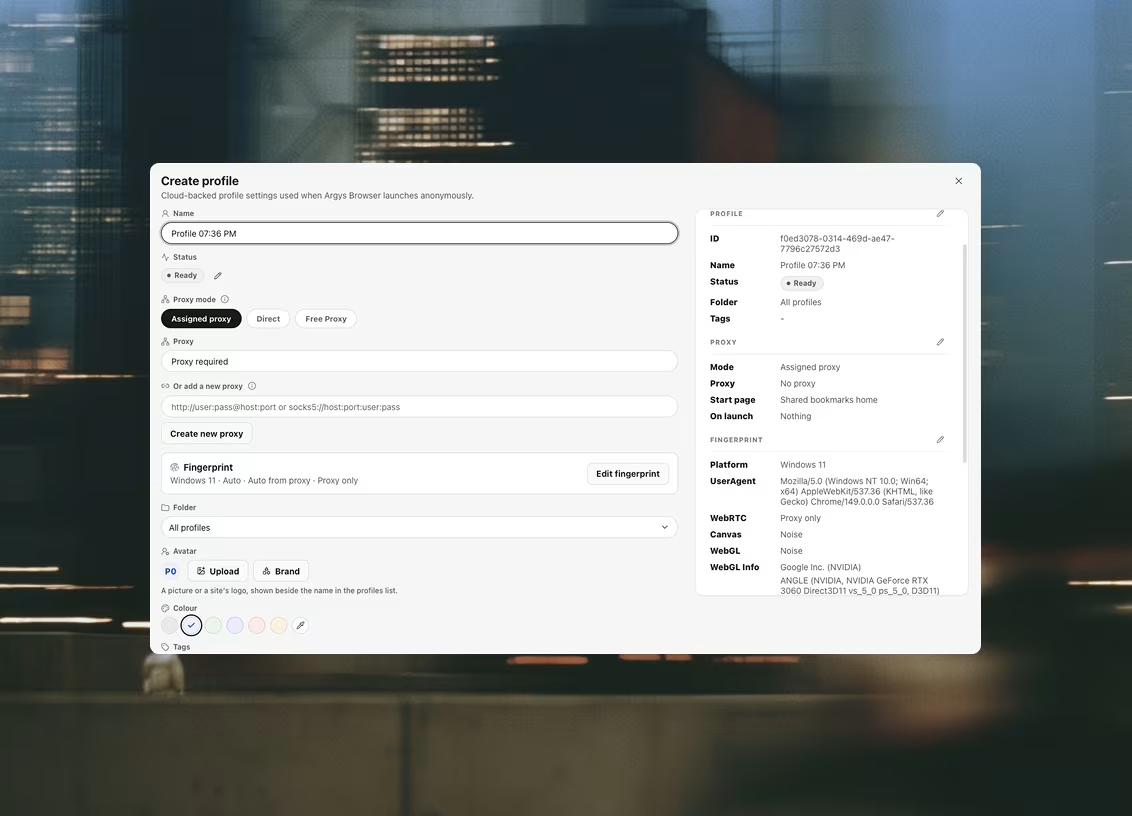
An Argus profile is one account's whole world. It starts from its own directory — separate storage, cache and cookie jar, session restore off — and presents a coherent hardware identity generated as one set, so the platform, CPU cores, memory, screen, timezone and languages agree with each other the way a real machine's do. Two of your storefronts run side by side on one laptop without either being able to see the other.
One honest caveat, because marketplace rules genuinely differ: Argus is for accounts you are entitled to run — a second account the platform permits, separate brands, separate legal entities, separate clients, separate regions. It separates them properly. It does not make an account you are not allowed to hold into one you are.
Proxies
Arrive from the country the account sells in
A seller account registered in Germany that signs in from a Singapore address every morning is a question waiting to be asked, and the answer usually costs a verification cycle. Argus keeps proxies in a shared library and assigns them per profile, so the German storefront arrives from Germany, the Brazilian one from Brazil, and neither has to be reconfigured when you rotate the provider behind it.
Every proxy is health-checked for egress IP, country and latency, and a failing proxy blocks the launch rather than falling back to your own connection — which is the failure that actually links accounts, because it stamps one real address across every profile that happened to launch during the outage. The check also flags a datacenter exit and names the provider behind it, which for marketplaces is the difference between a residential-looking seller and one that gets an identity check on the first listing.
Authenticated SOCKS5 works here — plain Chromium cannot speak that variant at all — and WebRTC leak protection is applied as browser policy on every profile, not as a toggle somebody forgets.
Profiles · Folders · Projects
A folder per brand, a project per season
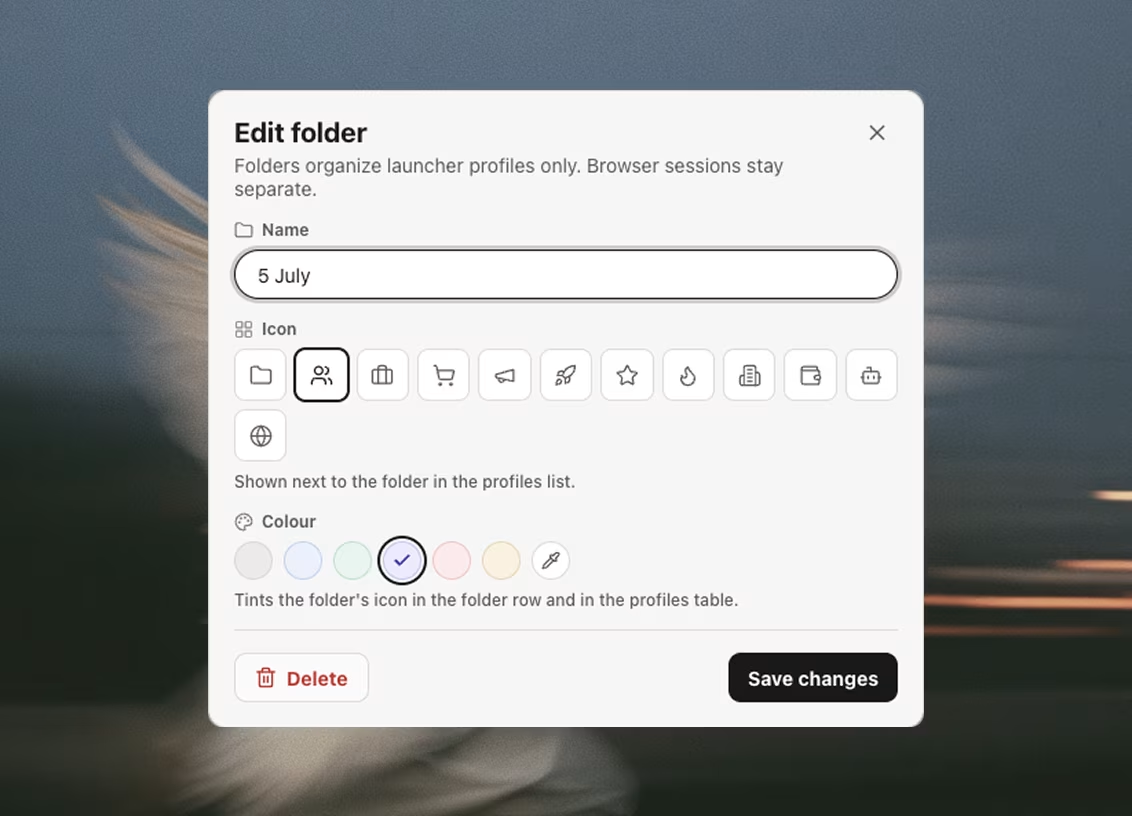
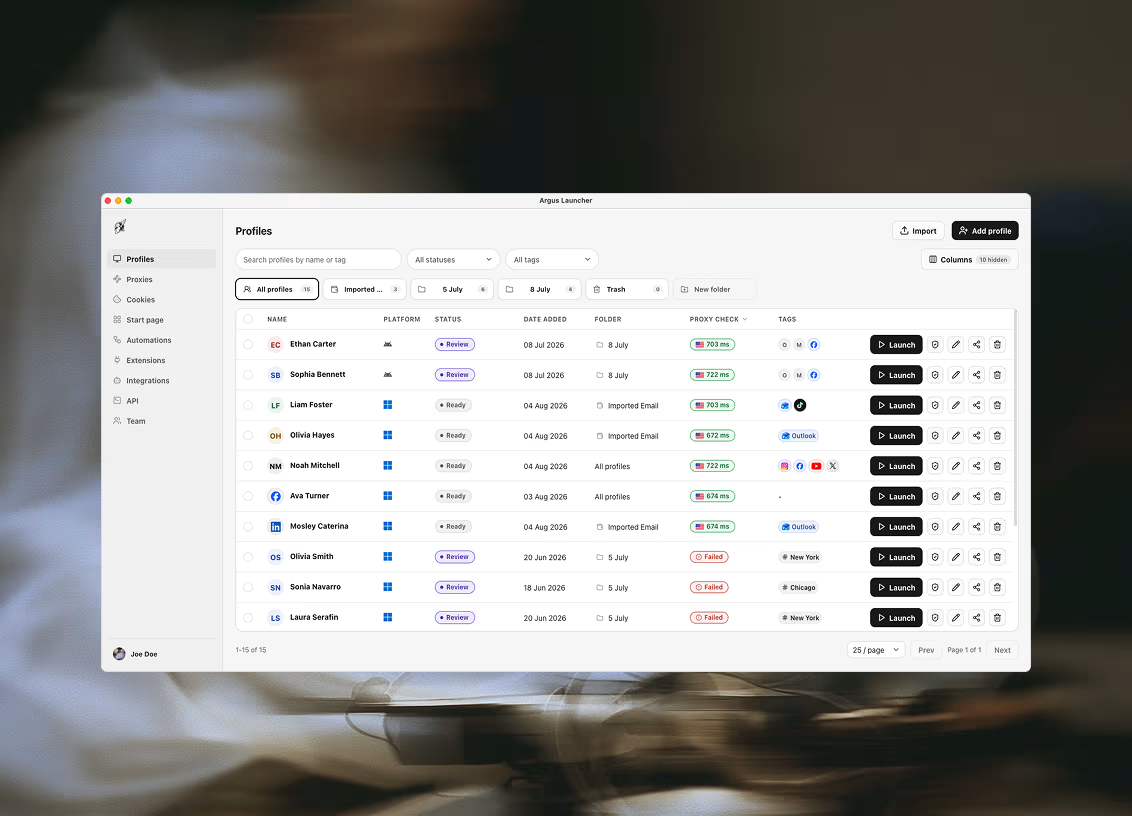
Sellers accumulate accounts faster than they retire them. Argus sorts profiles into folders with tags, custom status labels and notes, and the list searches, filters and pages instead of scrolling. Bulk launch, bulk edit and bulk delete cover the operations you would otherwise repeat forty times, and delete is soft — Trash first, restore available.
When a piece of work crosses those folders — a Q4 push that touches three brands, two proxies and a scraper — projects hold it together without moving anything. Membership is a link, not a move: nothing leaves its folder, the same shared proxy can serve several projects at once, and deleting the project leaves everything in it working.
Cookie sets · Teams
A VA can run the shop without ever holding the password
Sign in once, save the session as a cookie set, assign it to the profile, and the profile opens already signed in. Whoever is on shift — the listing assistant, the person answering buyer messages, the bookkeeper pulling settlement reports — lands inside the account without the password ever leaving your hands or the two-factor codes going to their phone.
The whole team works from one pool of profiles, proxies and cookie sets, synced to the organization rather than emailed around. Every write touches a single row, so two people working the same list at once cannot overwrite each other, and plan entitlements are enforced in the database rather than only in the interface.
Automation · Datasets
Competitor prices, in a table, before you open the laptop
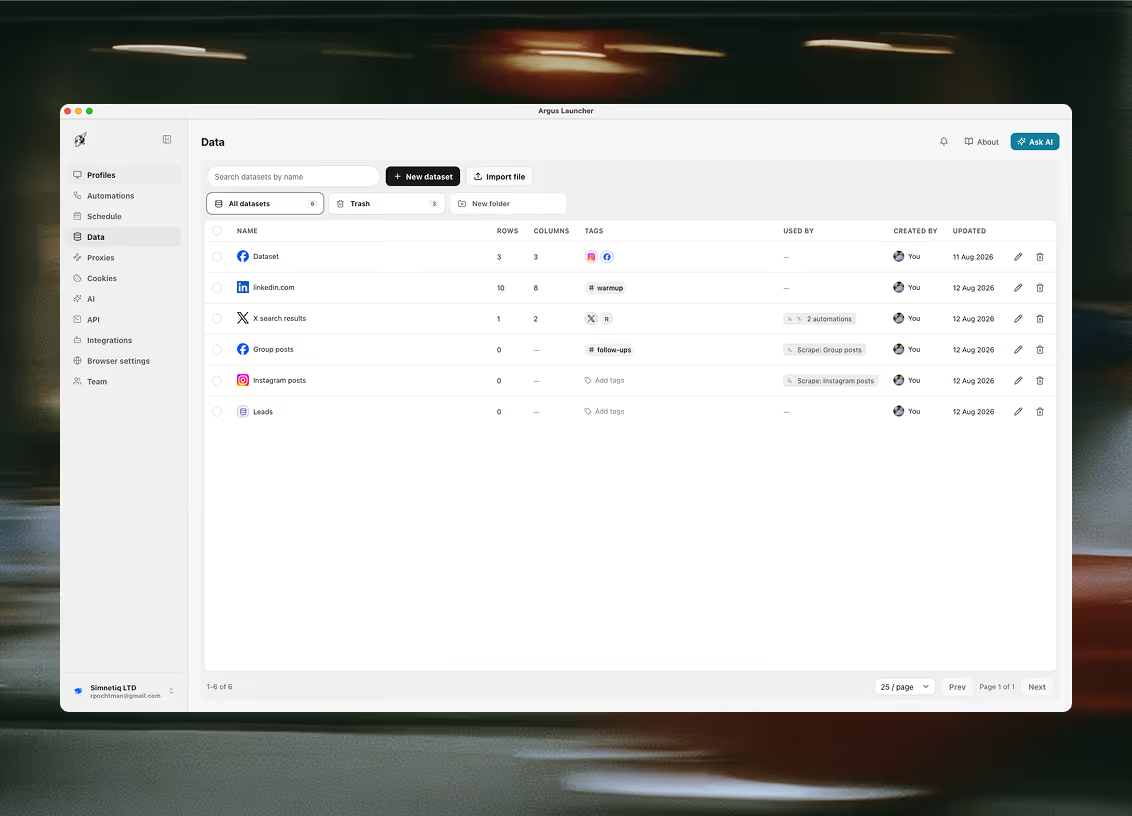
The research half of selling — what the same item costs on three marketplaces this morning, which of your listings lost the buy box overnight — is a browsing job that nobody should do by hand. Automations run it inside a real profile, behind that profile's own proxy and fingerprint, so the pages load the way a customer in that market would see them rather than the way a datacenter scraper does.
The rows land in a dataset — a table your workspace owns, with columns you named and typed. Import what you already have from CSV, JSON or XLSX, edit in the grid, filter and sort, and export the whole thing back out. Tomorrow's run reads that same table to decide what to check, so the work list maintains itself.
Put it on the calendar and it happens before you sit down — with the one caveat that entries fire only while the launcher is open, and a slot it was closed for is marked missed rather than caught up later.
Questions this comes with
Is a second seller account against marketplace rules?
It depends entirely on the marketplace, and the rules genuinely differ — some allow a second account outright, some allow it on approval, some forbid it. Argus is for accounts you are entitled to run: separate brands, separate legal entities, separate clients, separate regions, or a second account the platform permits. It separates them properly. It does not make an account you are not allowed to hold into one you are.
Is it enough to open two seller accounts in two tabs?
No — that answers the marketplace's question for it before you have listed anything. Two tabs in one window share a cookie jar, a cache, a storage quota and a list of service workers, and so does a second window. An incognito window gets a fresh jar, but every incognito window shares one jar with the others. In Argus the unit of separation is the profile, and the profile is backed by its own user-data directory rather than a partition inside a shared one.
Do I need a proxy in every country I sell in?
For a seller account registered in that country, it is the difference between an ordinary morning and a verification cycle. Proxies live in a shared library and are assigned per profile, so the German storefront arrives from Germany and the Brazilian one from Brazil, and neither has to be reconfigured when you change the provider behind it. The health check also flags an exit sitting on a datacenter network and names the provider running it, which for marketplaces is the difference between a residential-looking seller and one that gets an identity check on the first listing.
Can a VA run the shop without holding the password?
Yes. Sign in once, save the session as a cookie set, assign it to the profile, and whoever is on shift lands inside the account without the password ever leaving your hands or the two-factor codes going to their phone. The team works from one shared pool rather than emailing credentials around.
Can Argus collect competitor prices for me, and where do the rows go?
An automation runs the browsing job inside a real profile, behind that profile's own proxy and fingerprint, so pages load the way a customer in that market sees them rather than the way a datacenter scraper does. The rows land in a dataset — a table your workspace owns, with columns you named and typed — which you can also fill from a CSV, JSON or XLSX file, edit in the grid, and export whole. Tomorrow's run reads that same table to decide what to check.
Which operating systems does it run on?
macOS 13 Ventura and newer on Apple Silicon, and Windows 10 and 11 on x64. There is no Intel Mac build, no Linux build and no mobile app. You install the launcher and it downloads and installs the browser engine on first run, so there is no second installer to find.
Related use cases
Teams next door run into the same three problems
Agencies
Every client's accounts in one workspace: a profile per account, a shared pool of proxies and cookie sets, and the whole team signed into the same library.
Web scraping
Two ways to collect, and a table your workspace owns at the end of both: prebuilt collectors that open no browser window at all, and a real profile behind your own proxy for the pages that have to be driven.
Ticket resale
Seller and buyer accounts across marketplaces and regions, each in its own profile behind its own proxy — the accounts a licensed resale desk already holds, kept from being read as one.

Ready to run profiles at scale?
Download Argus for Mac or Windows and start free with 5 profiles.