
Use case
Argus for affiliate marketing
A profile per ad account and a proxy per geo, so a ban on one asset is one asset — not the whole buying operation walking out the door with it.





Media buying is an inventory business, and the inventory is accounts. You hold more of them than you can watch, they are worth money the day they are warm and nothing the day they are not, and the platform's whole job is to work out that they all belong to you. The five situations below are where that usually goes wrong, and what Argus does about each.
Isolation · Fingerprints
A ban should cost you one account, not the shelf it sat on
The expensive failure in this business is never the first ban. It is the hour afterwards, when accounts that had nothing to do with it start going down too — because they were all opened from the same browser, on the same machine, from the same address, and the platform had already worked out they were one operation.
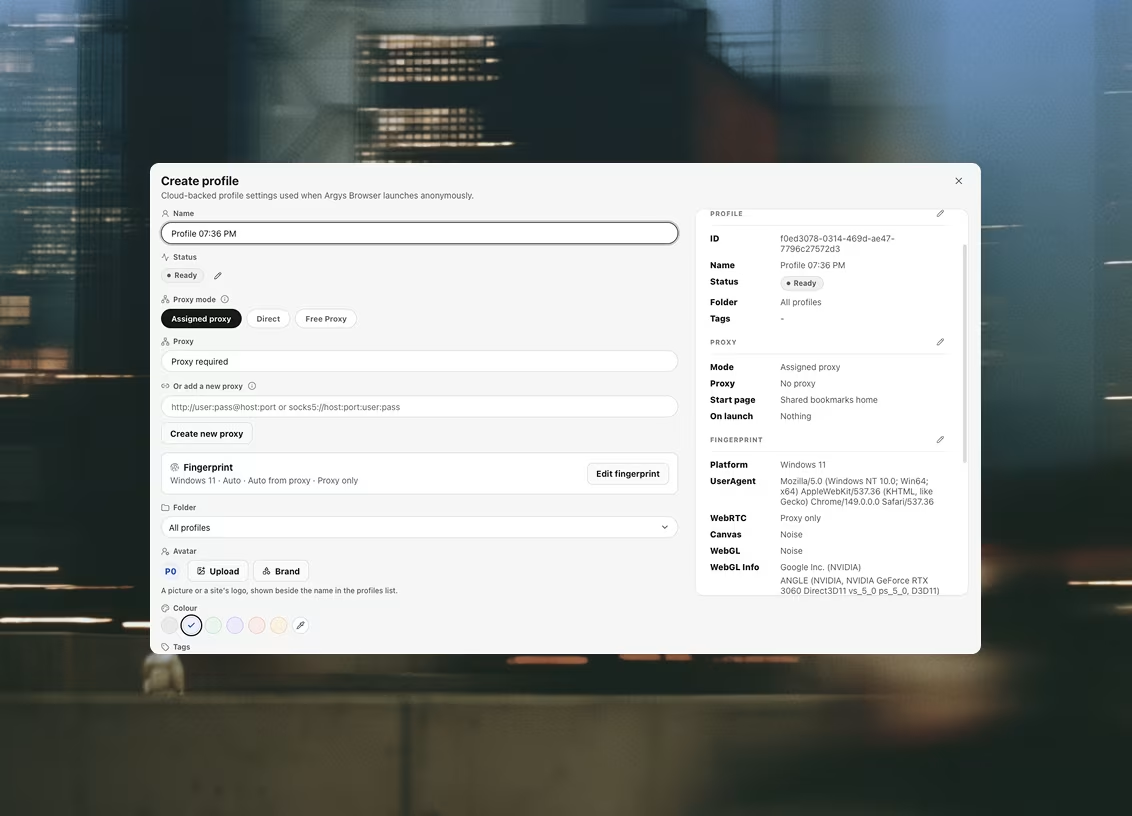
In Argus each account is a profile, and each profile starts from its own directory — its own storage, cache and cookie jar, with session restore off so a previous run cannot resurface inside a new one. On top of that sits a coherent hardware identity: platform, CPU cores, memory, screen, timezone and languages generated together, so nothing about the device contradicts anything else about it. Two of your profiles have no more in common than two strangers do.
Worth saying plainly, because this category is full of people who will not say it: that is separation, not immunity. Argus makes it hard for a platform to join two accounts by what the browser reveals. It cannot make a campaign compliant, and it does not promise an account survives what you do with it.
Proxies
Run the geo you are buying, and know the exit is what it claims
An offer that pays in Brazil is reviewed by people in Brazil, priced against Brazilian inventory, and looks wrong the moment its account signs in from Frankfurt. Argus keeps a shared proxy library rather than a text field per profile: assign the Brazilian exit to the Brazilian assets, the German one to the German assets, and change either without touching the profiles that use it.
The part that protects the account is the checking. Every proxy is health-checked for its egress IP, the country it lands in and its latency, and one that fails its check blocks the launch instead of quietly falling back to your own connection and stamping your home address onto an account that has only ever lived somewhere else. The check also flags an exit sitting on a datacenter network and names the provider behind it — which is the most ordinary reason a fresh account gets asked for documents on day one. Authenticated SOCKS5 works, which plain Chromium cannot do at all, and WebRTC is sealed as browser policy so a page cannot read your real address around the proxy.
Proxies also expire, usually at the worst moment. Record when a term ends and Argus warns you a week out, then asks you to confirm before launching anything behind one that has already lapsed.
Profiles · Folders
Two hundred accounts is a list problem before it is an account problem
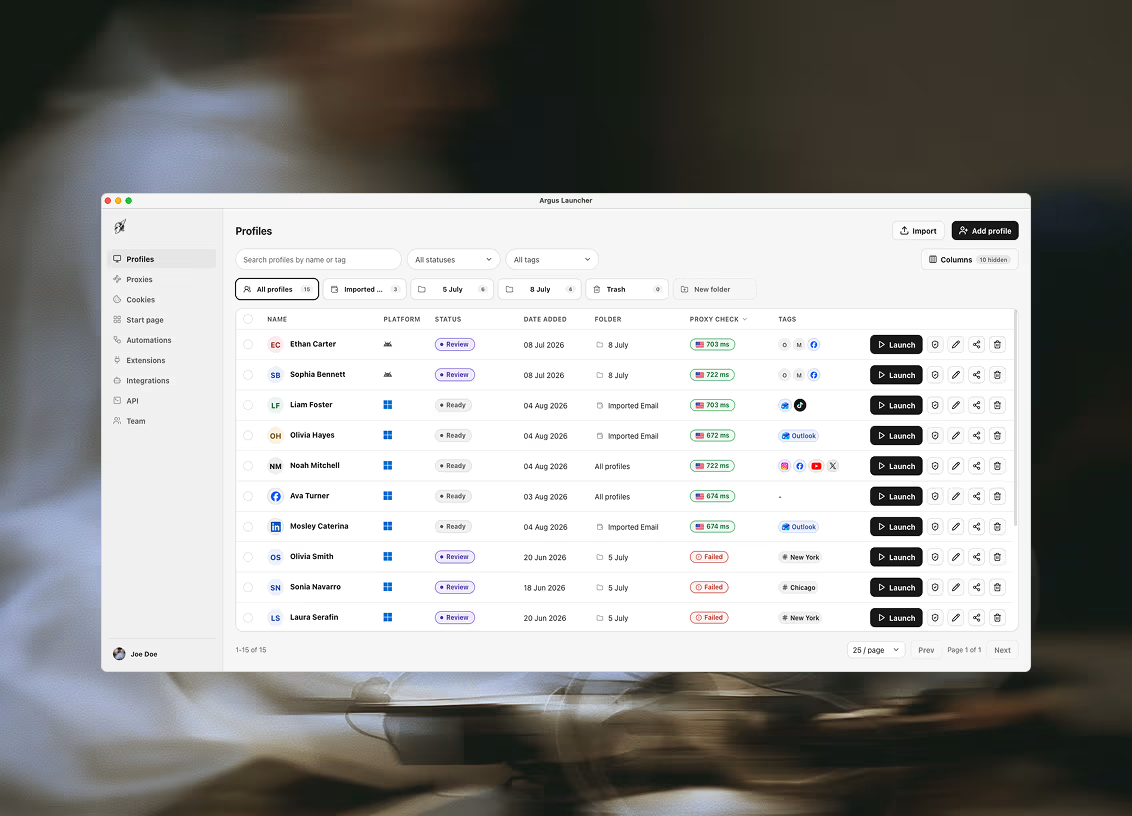
At three accounts you remember everything. At two hundred you are hunting for the one that was warming for a vertical you paused in March, and the tool either handles that or it is furniture. Argus sorts profiles into folders with tags, custom status labels and per-profile notes, and the list searches, filters and pages rather than scrolling forever.
Everything that would be tedious one at a time is a bulk operation: launch a selection, edit a selection, delete a selection. Accounts arrive by CSV import and leave by CSV export, so a list you already keep in a spreadsheet does not have to be retyped. Delete is soft — a profile goes to Trash and comes back — which matters on the day the selection you just acted on was the wrong one.
Cookie sets
The session belongs to the account, not to whoever signed in
Sign in once, save the session as a cookie set, and assign it to the profile. The cookies are seeded into the session at launch, so the profile opens already signed in — no password in a group chat, and no waiting on the one person whose phone receives the codes.
The library is shared, so a set moves between profiles without being re-uploaded, and sessions inherited from a previous setup import from a file or a whole folder at once. When a buyer joins or leaves, the accounts stay where they are: nothing lived on their laptop, so nothing leaves with it.
Automation · Schedule · Datasets
Warm-up and the morning check are jobs, not afternoons
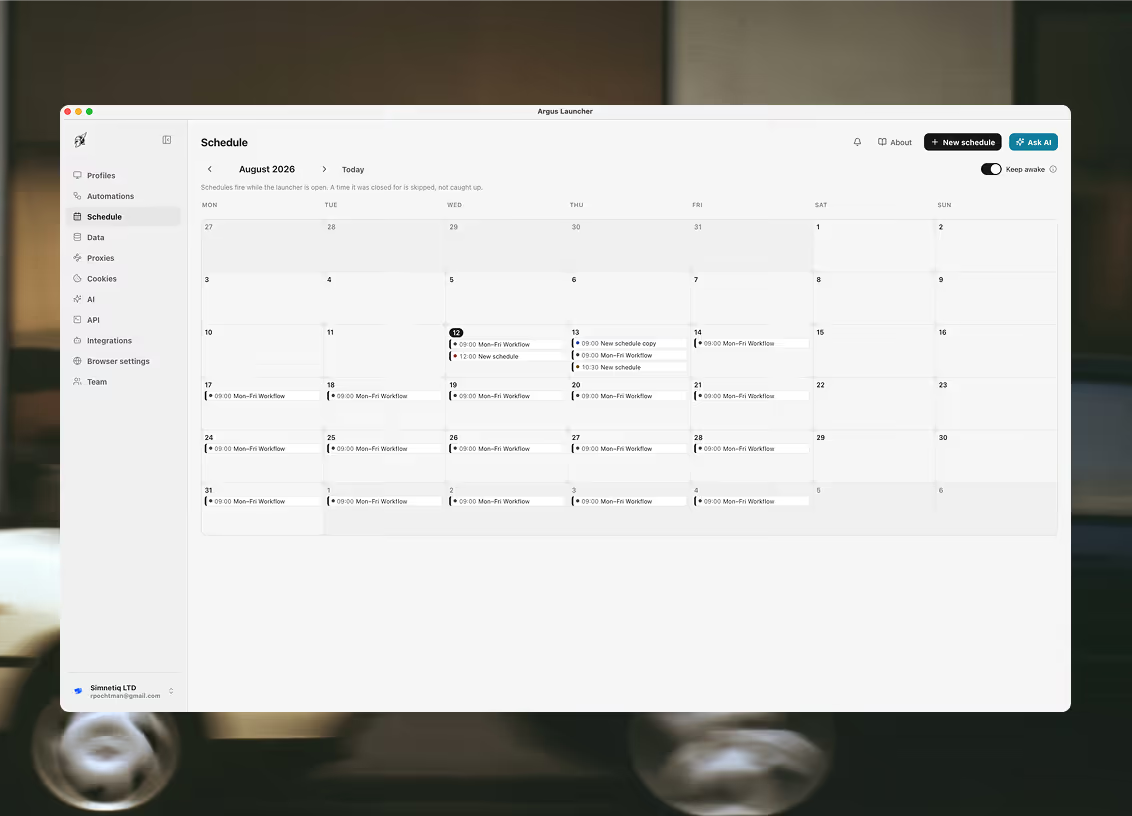
A new account needs hours on it before it can be trusted with budget, and those hours have to be spread out rather than crammed into one sitting. That is a calendar entry: pick the automation that does the browsing, name every profile it runs on, and repeat it on the weekdays you choose — with a start and end day when the warm-up is only meant to last a fortnight. The entry works through its profiles one at a time, each behind its own proxy, cookies and fingerprint.
The morning pass over live campaigns is the same machinery pointed at a different question, and the answers land somewhere you can use. The last step writes what it found into a dataset — a table your workspace owns, with columns you named — so today's account statuses and yesterday's flags sit in one place instead of in a run log one person happens to read. Tomorrow's run loads rows back out of that same table to decide what to work on.
Two limits worth knowing before you build the week around it. Entries fire only while the launcher is open — a slot it was closed for is marked missed and skipped, never caught up — so the machine holding an overnight calendar has to stay awake; Keep awake stops it idling, though a closed lid still sleeps. And two machines signed into one workspace cannot double-run a slot: the first to reach it claims it and the other steps aside.
Questions this comes with
Will Argus stop my ad accounts getting banned?
No. Nothing stops that, and a tool that says otherwise is selling you a story. What Argus changes is what a ban costs. A profile per ad account means each one has its own storage, its own hardware identity and its own exit IP, so the signals a platform uses to decide that two accounts are one operation are not there to be read. The account you lose is the account you lose.
Do I need a different proxy for every ad account?
For account work, yes — and a sticky one rather than a rotating endpoint. A session whose address changes mid-scroll looks like a hijacked session, because that is what a hijacked session looks like. Argus does not sell proxies and is not tied to anyone who does: any HTTP or SOCKS5 endpoint works, including SOCKS5 that requires a username and password, which ordinary Chromium cannot use at all.
What happens if a proxy dies mid-campaign?
The launch is blocked rather than allowed to proceed. A proxy that fails its health check does not fall back to your own connection, which is the failure that actually links accounts — it stamps one real address across every profile that happened to launch during the outage. A slower background sweep also loads real destination sites through each proxy, so a row can name the site that refused it rather than showing a green tick that means nothing, and if you record the date the term ends you are warned a week out.
Can I run this on a VPS or a Linux box?
No. The builds are macOS 13 Ventura and newer on Apple Silicon, and Windows 10 and 11 on x64. There is no Linux build, no Intel Mac build and no mobile app. The launcher and the browser both run on your own machine, which is also why there is no hosted runner for automations or schedules.
Can a media buyer work an account without holding the login?
Yes. Save the session as a cookie set and assign it to the profile; the profile opens already signed in and nobody has to be told the password. The whole team works from one shared pool of profiles, proxies and cookie sets rather than trading credentials in a group chat.
Do scheduled checks run while my machine is off?
No. The calendar fires only while the launcher is running, and a slot it was closed for is marked missed and skipped rather than caught up later. That is the same boundary automations have, and it is deliberate: running your sessions on our machines would mean handing over the cookies, proxy credentials and fingerprint that make the profile yours.
Related use cases
Teams next door run into the same three problems
Agencies
Every client's accounts in one workspace: a profile per account, a shared pool of proxies and cookie sets, and the whole team signed into the same library.
iGaming affiliates
Operator back-offices, tracker dashboards and the ad accounts feeding them, each in a profile of its own — and each arriving from the market it reports on.
Web scraping
Two ways to collect, and a table your workspace owns at the end of both: prebuilt collectors that open no browser window at all, and a real profile behind your own proxy for the pages that have to be driven.

Ready to run profiles at scale?
Download Argus for Mac or Windows and start free with 5 profiles.