
Use case
Argus for iGaming affiliates
Operator back-offices, tracker dashboards and the ad accounts feeding them, each in a profile of its own — and each arriving from the market it reports on.




An iGaming affiliate holds more logins than almost anyone: a back-office account with every operator on the roster, a tracker, the ad accounts feeding it, and a separate set of all three for each market that is licensed separately. They also work in the most geo-sensitive vertical there is, where a dashboard opened from the wrong country shows the wrong product. The five sections below are what Argus does about that.
Isolation · Cookie sets
Twenty operator back-offices, twenty separate browsers
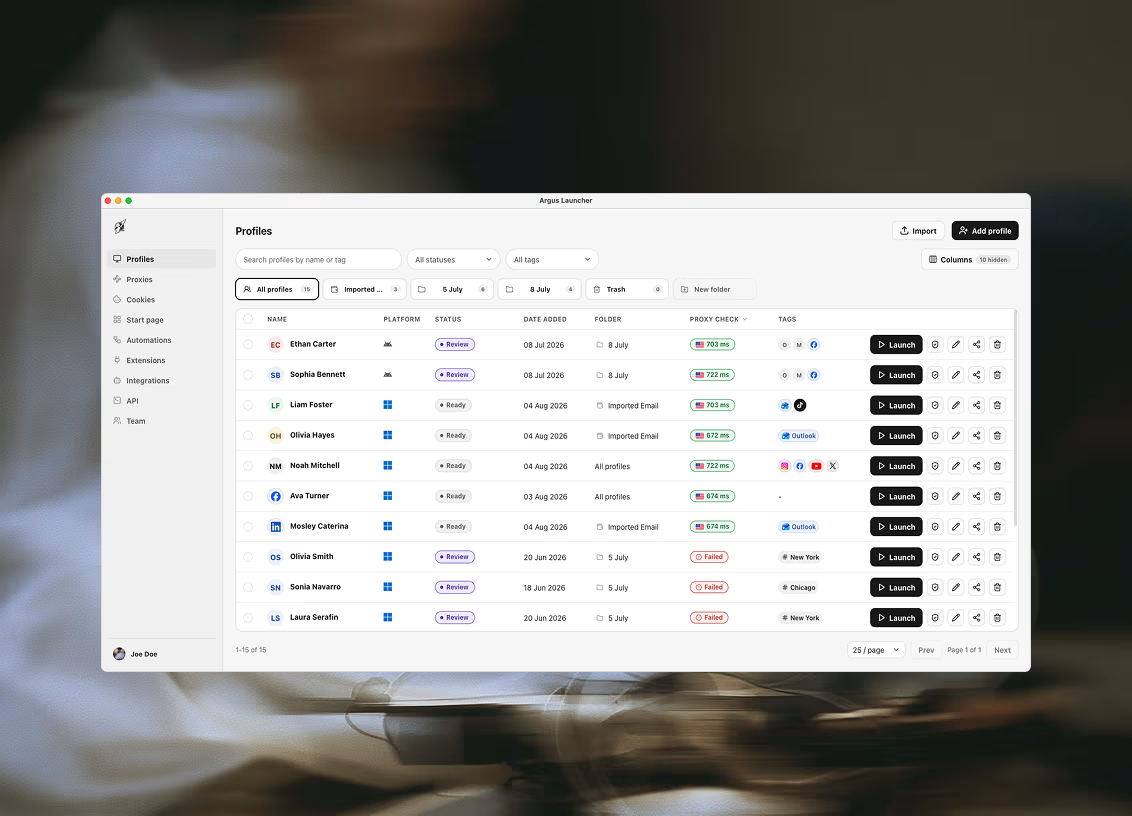
Affiliate managers hand out one login per programme, and a serious affiliate accumulates dozens. Kept in one browser they share a cookie jar and storage, which is how a single sign-out cascades and how two programmes end up seeing the same session. Each one in Argus is a profile that starts from its own directory — separate storage, cache and cookies, session restore off.
Sign in once, save the session as a cookie set, and the profile opens already signed in from then on. The library is shared, so a set moves between profiles without being re-uploaded, and sessions arrive by file or by whole folder.
Proxies
A licensed market is a different product, and it checks where you are
Ontario is not Sweden is not Brazil. Offers, brands, bonus terms and often the whole site differ per licence, and every one of them decides which you see from your address. Checking a landing page from the wrong country tells you nothing useful about the campaign you are running into it.
Argus keeps proxies in a shared library and assigns one per profile, so the Ontario profile opens Ontario's version. Health checks report the egress IP, its country and latency; a failing proxy blocks the launch rather than falling back and showing you your own market's page while you believe you are looking at another; the check flags a datacenter exit and names the provider; and WebRTC is sealed as browser policy so a page cannot read your real address around the proxy. Record when a proxy's term ends and you are warned a week out.
Fingerprints · Profiles
The ad accounts feeding it, one asset per profile
The buying side of this vertical has the same shape as any other performance business: many ad accounts, each of which is worth something only while it is live. A profile per asset, each with its own coherent hardware identity — platform, cores, memory, screen, timezone and languages generated together — is what keeps a problem on one from being read as a problem with all of them.
The list is built for the count: folders, tags, custom status labels, notes, search and filters, bulk launch and bulk edit, CSV in and out, and a soft delete that lands in Trash rather than nowhere.
Automation · Datasets · Schedule
Postbacks say one thing, the operator dashboard says another
Reconciliation in this vertical is a standing job, because the tracker's numbers and the operator's numbers are never quite the same and the difference is your invoice. Automations open each back-office in its own profile, behind its own proxy and cookies, and read the figures the same way you would.
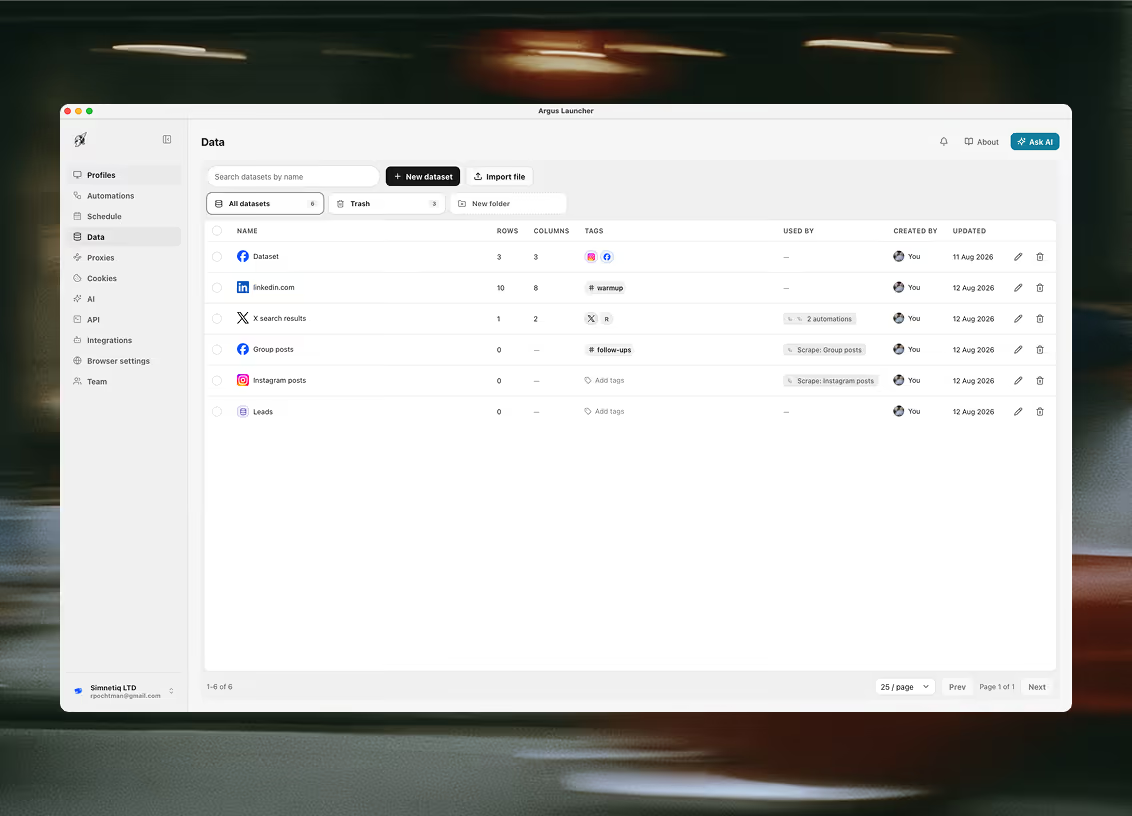
They land in a dataset — a table your workspace owns, with columns you named and typed — so this month's numbers from twenty operators sit in one table you can filter and export instead of twenty tabs and a spreadsheet. A calendar entry runs the sweep on the days you pick, one profile at a time; entries fire only while the launcher is open, and a slot it was closed for is marked missed rather than caught up later.
Acceptable use
What this page is not for
This page is about the accounts an affiliate business legitimately holds: back-offices, trackers, ad accounts and the market research behind them. It is not about player accounts, and Argus is not sold for opening several of those to farm signup offers.
That is not squeamishness. Our acceptable use policy already prohibits advertising, affiliate and incentive fraud — claiming payment for traffic or actions that were not what they were represented to be — and bonus abuse is the textbook case of it. We are not going to sell a page that contradicts our own terms.
Questions this comes with
Is this for bonus abuse?
No. Our acceptable use policy already prohibits advertising, affiliate and incentive fraud — claiming payment for traffic or actions that were not what they were represented to be — and multi-accounting an operator to farm signup offers is the textbook case of it. We are not going to sell a page that contradicts our own terms. What is in scope is the legitimate back-office side of affiliate work.
What does a profile per surface actually buy me?
Operator back-offices, tracker dashboards and the ad accounts feeding them each get their own browser: their own storage and cookie jar, their own generated device, their own exit IP. That keeps a shared session or a shared fingerprint from joining accounts that have no business being joined, and it keeps a login to one operator from carrying into the next tab.
Do I need a proxy in the market I report on?
Operator portals and trackers are frequently geo-restricted, and an account that has always arrived from one market and suddenly arrives from another draws a review. Proxies are held in a shared library and assigned per profile, so each surface arrives from the market it reports on. Any HTTP or SOCKS5 endpoint works, including SOCKS5 that requires a username and password.
Can the team share these accounts?
Yes. Members of an organization share one pool of profiles, proxies, cookie sets, folders and extensions, and a saved session assigned to a profile means a teammate can open an operator back-office without being told its password. There is no per-member permission model today — everyone in the workspace sees the whole pool — so know that before you add a seat.
Can the morning numbers be pulled before I sit down?
An automation can run the collection inside the right profile and drop the rows into a dataset your workspace owns, and a schedule entry can put that on the calendar. The caveat is firm: entries fire only while the launcher is open, and a slot it was closed for is marked missed and skipped rather than caught up later.
Related use cases
Teams next door run into the same three problems
Affiliate marketing
A profile per ad account and a proxy per geo, so a ban on one asset is one asset — not the whole buying operation walking out the door with it.
Agencies
Every client's accounts in one workspace: a profile per account, a shared pool of proxies and cookie sets, and the whole team signed into the same library.
Bounties & airdrops
A profile per entry: its own device, its own exit IP and its own cookie jar, so a campaign that checks whether two wallets came from one machine finds nothing to join.

Ready to run profiles at scale?
Download Argus for Mac or Windows and start free with 5 profiles.